
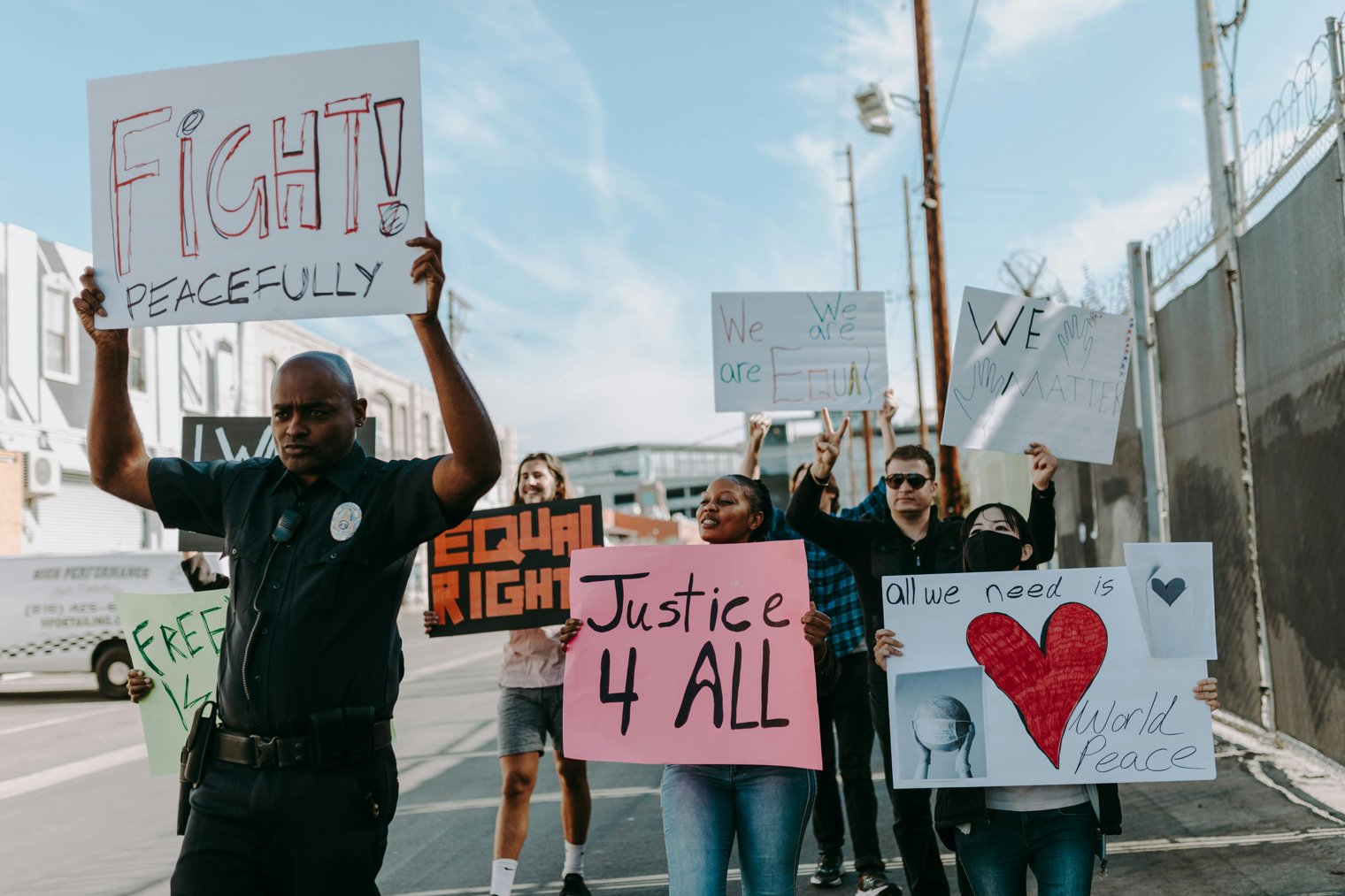
Stand for what’s right, even when it’s difficult nonviolent resistance for a better future.
Engaging in civil disobedience is a powerful form of peaceful protest used to challenge unjust laws and policies. This scenario involves actively participating in an organized protest, where you and other activists take a stand for a cause often by breaking a law in a nonviolent manner. Whether it’s sit-ins, marches, or other acts of resistance, civil disobedience seeks to highlight the moral injustices at the heart of the issue and demand change. The experience is emotional, challenging, and deeply rooted in principles of social justice.
8:00 AM: The protestors gather at a local landmark, preparing for the day of action, setting up signs and banners, and sharing messages of solidarity.
10:00 AM: You take your position among the protestors, and the chants of “No justice, no peace!” begin to echo through the streets.
12:00 PM: The protest moves to a government building, where you sit peacefully in front of the entrance, blocking access to symbolize resistance.
2:00 PM: The police begin to take action, and arrests are made. You remain calm, your body and mind focused on the cause.
4:00 PM: The protest winds down, and those who have been arrested are released. The community reflects on the day’s events, knowing their actions have raised awareness for the cause.
Government Building (e.g., City Hall, 100 Civic Center Ave, Hometown, USA)
Overview: The government building where protestors gather to take a stand against unjust policies.
Landmarks: The large stone steps leading to the entrance often become the focal point of peaceful sit-ins and civil disobedience actions.
Tips: If engaging in civil disobedience at this location, arrive early to ensure you have a clear view and secure a spot for the protest.
Local Park (e.g., Central Park, 200 Park St, Hometown, USA)
Overview: A public space often used as a staging ground for rallies, speeches, and the gathering of protestors before a civil disobedience action.
Landmarks: Parks offer a neutral, open space where community members can unite and prepare for the event ahead.
Tips: Use the park as a starting point to meet with fellow activists, organize your materials, and set up logistics for the action.
Police Station (e.g., Hometown Police Department, 300 Justice Rd, Hometown, USA)
Overview: A place where arrested protestors are typically taken after being detained during acts of civil disobedience.
Landmarks: Police stations are often heavily guarded and are central to the narrative of resistance as protestors are processed.
Tips: Stay calm and follow legal advice during any arrest process. Document any interactions with law enforcement to ensure accountability.
City Hall (100 Civic Center Ave, Hometown, USA)
Hometown Police Department (300 Justice Rd, Hometown, USA)
Central Park (200 Park St, Hometown, USA)
Hometown Library (456 Reading Ave, Hometown, USA)
Local University Campus (e.g., Hometown University, 789 College Rd, Hometown, USA)
Local Church (e.g., Hometown Church, 123 Church St, Hometown, USA)
Public Plaza (e.g., Main Plaza, 500 Main St, Hometown, USA)
Hometown Government Building (e.g., 100 Government Blvd, Hometown, USA)
State Capitol Building (e.g., State Capitol, 1234 Capitol Hill Rd, State City, USA)
Memorial Park (e.g., Hometown Memorial Park, 200 Memorial Blvd, Hometown, USA)
Local Activist Center (e.g., Activist Headquarters, 700 Cause Rd, Hometown, USA)
Public Park (e.g., Riverside Park, 300 River Rd, Hometown, USA)
Civic Center (e.g., Hometown Civic Center, 400 Civic Ave, Hometown, USA)
Local Justice Center (e.g., Justice Center, 1200 Court St, Hometown, USA)
Nonprofit Advocacy Group (e.g., Local Advocacy Hub, 550 Change Blvd, Hometown, USA)
Hometown Market Square (e.g., 1000 Market St, Hometown, USA)
Union Square (e.g., Hometown Union Square, 200 Union Ave, Hometown, USA)
Local School (e.g., Hometown High School, 2500 School Rd, Hometown, USA)
Hometown Sports Arena (e.g., 1500 Arena Blvd, Hometown, USA)
Local Police Station (e.g., Hometown Police Dept, 350 Law St, Hometown, USA)
Downtown Business District (e.g., 300 Business Rd, Hometown, USA)
State Legislature Building (e.g., State Capitol, 400 State Blvd, State City, USA)
Hometown Conference Center (e.g., 600 Convention Rd, Hometown, USA)
Local Coffee Shop (e.g., The Daily Grind, 400 Coffee St, Hometown, USA)
Community Church (e.g., 555 Faith Ave, Hometown, USA)
Nonviolent Resistance
Social Justice
Civic Engagement
Political Activism
Human Rights
1. City Hall: Services/Services
2. Hometown Police Department: Services/Services
3. Central Park: Services/Services
4. Riverside Park: Services/Services
5. Hometown Library: Services/Services
6. Hometown University: Services/Services
7. Activist Headquarters: Services/Services
8. Main Plaza: Services/Services
9. Hometown Government Building: Services/Services
10. Memorial Park: Services/Services
11. State Capitol: Services/Services
12. Public Plaza: Services/Services
13. Justice Center: Services/Services
14. Local Advocacy Hub: Services/Services
15. Local Nonprofit Group: Services/Services
16. Change.org: Online Petition Platform
17. Local Law Firm: Services/Services
18. Hometown Sports Arena: Services/Services
19. State Legislature Building: Services/Services
20. Nonprofit Advocacy Group: Services/Services
21. Hometown Coffee Shop: Services/Services
22. The Daily Grind: Services/Services
23. Local School: Services/Services
24. Local Community Center: Services/Services
25. Local Town Hall: Services/Services
26. Political Action Committee: Services/Services
27. Hometown Civic Center: Services/Services
1. Activist Headquarters (Pick up materials and literature for the protest)
2. Hometown University (Organize student activists)
3. Change.org (Set up petitions and mobilize online support)
4. The Daily Grind (Meet up with fellow activists before heading out)
5. Local Coffee Shop (Network with like-minded individuals)
6. Local Law Firm (Get legal advice on how to stay safe during the protest)
7. Hometown Police Department (Understand legal boundaries and safety measures)
8. Hometown Civic Center (Attend pre-protest meetings)
9. Public Plaza (Arrange carpooling or transportation to protest site)
10. Local Nonprofit Group (Collaborate with other organizations for collective action)
• Protest Sign (Message clearly visible):
• Comfortable Footwear (For long marches):
• Water Bottle (Stay hydrated):
• Phone (For emergency contact and organizing):
• Legal Aid Information (Know your rights):
• Protest Materials (Flyers, literature):
• Portable Charger (Keep devices charged):
• Identification (For safety):
• Sunscreen (If protesting outdoors):
• Snacks (To keep energy up during long protests):
• Nike Running Shoes (For Comfortable Footwear)
• Hydro Flask Water Bottle (To Stay Hydrated)
• Anker Power Bank (To Charge Your Phone)
• Sharpie Markers (To Write on Signs)
• Patagonia Jacket (For Weather Protection)
Legal Consequences (Risk of arrest during civil disobedience)
Fatigue (Standing or marching for long periods)
Poor Weather Conditions (Rain or heat can make protests uncomfortable)
Communication Breakdown (Difficulty coordinating large groups)
Police Escalation (Risk of conflict with law enforcement)
Emotional Exhaustion (Dealing with the weight of social change efforts)
Overcrowding (Difficulty moving through large protest areas)
Regularly Attending Protests
Participating in Community Organizing
Using Social Media for Advocacy
Preparing Protest Materials (Signs, leaflets)
Engaging in Post-Protest Reflection
Educating Others on the Cause
Collaborating with Other Activists
Follow-Up with Elected Officials (Contacting lawmakers after the protest)
Engaging in Future Protests (Participating in other movements)
Supporting Political Candidates (Volunteer or donate to causes)
Writing About the Experience (Sharing on social media or blogs)
Joining an Advocacy Group (Continuing activism in different formats)
Events
You must log in to add an event.
Events for this Scenario
No events found for this scenario yet.
Experiences
Please log in to share your experience.