
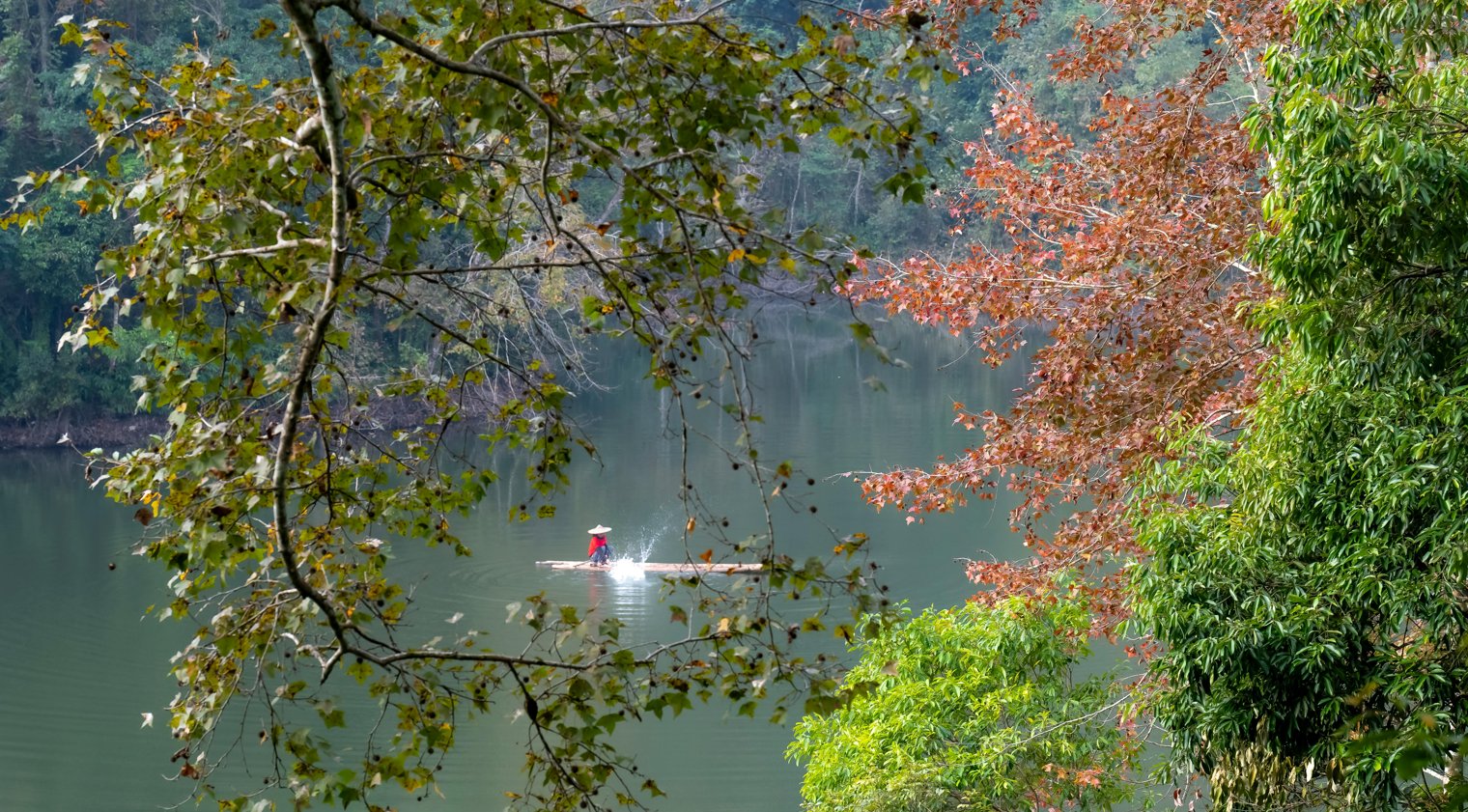
Mastering the J-Stroke effortlessly navigating solo in your canoe.
Paddling a canoe solo requires technique and skill, and one of the most effective strokes for solo paddlers is the J-stroke. This technique allows you to keep your canoe straight and moving forward while paddling on one side. It's particularly helpful when you’re alone in the canoe, allowing you to maneuver without needing to switch sides constantly. This scenario walks you through the process of learning and applying the J-stroke, focusing on the rhythm and balance required to paddle effectively.
8:00 AM: You arrive at the lakeside, excited to paddle solo for the first time.
8:10 AM: You launch the canoe and position yourself, preparing to learn the J-stroke.
8:20 AM: You begin paddling, focusing on the proper technique for the J-stroke to keep the canoe straight.
8:40 AM: After several attempts, you start to feel the rhythm of the J-stroke and notice your canoe moving more steadily.
9:00 AM: You glide through the water confidently, mastering the J-stroke as you enjoy the peaceful surroundings.
Overview: A popular spot for solo canoeing with pristine lakes and waterways.:
Landmarks: Basswood Lake, Gunflint Trail.:
Tips: Ideal for practicing the J-stroke in quiet waters with minimal current.:
Overview: Known for its canoe routes through wilderness areas with calm lakes and rivers.:
Landmarks: Canoe Lake, Lake Opeongo.:
Tips: The J-stroke is particularly helpful on these calm waters to prevent unnecessary veering.:
Yellowstone National Park (Wyoming)
Overview: The serene waters of Yellowstone are perfect for solo canoeing and mastering paddling techniques.:
Landmarks: Yellowstone Lake, Lamar Valley.:
Tips: A great place to practice the J-stroke with wildlife watching opportunities along the way.:
Adirondack Mountains (New York): Ideal calm waters for learning and practicing solo paddling.
Grand Teton National Park (Wyoming): Serene lakes perfect for solo canoe practice.
Great Smoky Mountains National Park (Tennessee/North Carolina): Beautiful streams and rivers for practicing paddling.
Quetico Provincial Park (Ontario, Canada): Wilderness with calm lakes and perfect canoe routes.
Maine’s Allagash Wilderness Waterway (Maine): A remote location great for testing canoeing techniques.
Thousand Islands National Park (Ontario, Canada): A canoe haven with calm waterways for practicing solo paddling.
Olympic National Park (Washington): Rivers and lakes ideal for practicing solo paddling with minimal current.
Yellowstone Lake (Wyoming): Large body of water for learning the J-stroke on calm waters.
Lake Tahoe (California/Nevada): Clear waters that make it easy to master paddling techniques.
Boundary Waters Canoe Area Wilderness (Minnesota): A world-class canoeing destination with ideal practice waters.
Brule River (Wisconsin): A calm river offering perfect conditions for solo paddling practice.
Killarney Provincial Park (Ontario, Canada): Perfect waters for solo canoeing with minimal interruptions.
Sequoia National Park (California): Lakes with calm water surfaces for practicing paddling.
Glacier National Park (Montana): Remote lakes ideal for solo canoeing in the wilderness.
Algonquin Provincial Park (Ontario, Canada): One of the best spots for learning paddling techniques with peaceful lakes.
Lake Opeongo (Ontario, Canada): Great location for practicing the J-stroke in a secluded setting.
Banff National Park (Canada): Calm waters around the park’s lakes and rivers perfect for paddling practice.
Green River (Utah): River routes suitable for practicing the J-stroke in flat water.
Michigan’s Upper Peninsula (Michigan): Pristine lakes and rivers ideal for solo paddling adventures.
Rocky Mountain National Park (Colorado): Tranquil lakes for practicing solo canoeing.
Okanagan Lake (British Columbia, Canada): Calm lake conditions perfect for mastering paddling strokes.
Lake Michigan (Illinois, Indiana, Wisconsin): Ideal for solo paddling practice on large lakes.
Florida Everglades National Park (Florida): Calm waterways for mastering the J-stroke.
San Juan Islands (Washington): Coastal waters that offer opportunities to practice the J-stroke while enjoying scenery.
Chattahoochee River (Georgia): Calm river spots for practicing paddling techniques.
Outdoor Adventure, Canoeing, Solo Recreation, Water Sports, Wilderness Exploration
1. REI Co-op: Camping and Canoeing Gear
2. Amazon: Paddling Gear and Canoe Accessories
3. Thule: Roof Racks for Canoes
4. Backcountry: Canoeing Gear and Accessories
5. Wenonah Canoe: Canoe Manufacturer
6. Old Town Canoes: Canoe Manufacturer
7. L.L. Bean: Outdoor Gear and Canoeing Equipment
8. Dick’s Sporting Goods: Canoeing Equipment
9. Oru Kayak: Foldable Canoes and Equipment
10. NRS: Canoeing and Outdoor Gear
1. REI Co-op (Canoeing gear for solo adventures)
2. Amazon (Canoeing accessories and J-stroke guides)
3. Backcountry (Specialized solo paddling gear)
4. Thule (Roof racks for carrying your canoe)
5. Old Town Canoes (Find your perfect canoe)
6. L.L. Bean (Paddling gear and accessories)
7. Dick’s Sporting Goods (Canoeing gear for beginners and experts)
8. Oru Kayak (Innovative foldable canoes for travel)
9. Wenonah Canoe (Premium canoes for solo paddlers)
10. NRS (Water sports gear for paddling)
• Paddle (with correct J-stroke technique):
• Canoe (for solo paddling):
• Life Jacket (for safety while paddling):
• Waterproof Bag (to store valuables):
• Water Bottle (for hydration):
• Sunglasses (for sun protection):
• Hat (for sun protection):
• Canoe Seat (for comfort while paddling):
• Map or GPS (for navigation):
• First Aid Kit (for emergencies):
• Wenonah Solo Canoe (A high-quality canoe for solo paddlers)
• NRS Solo Paddle (Paddle designed for solo paddling with J-stroke)
• Old Town Discovery Canoe (Perfect for learning the J-stroke)
• Sea to Summit Dry Bag (For keeping your gear dry while paddling)
• Thule Canoe Roof Rack (For transporting your canoe)
• Fatigue: Solo paddling for long periods can be exhausting.
• Wind Resistance: Wind can make it more difficult to paddle and maintain control.
• Learning Curve: The J-stroke can be difficult for beginners to master.
• Boat Stability: Solo canoes are less stable than tandem canoes, requiring more control.
• Time-Consuming: The J-stroke requires practice to be effective and efficient.
• Limited Space: Solo canoes may not have as much room for gear as tandem models.
• Potential for Drifting: Without proper J-stroke technique, you might drift off course.
• Regularly Practice the J-Stroke: To maintain control and improve efficiency.
• Paddle Consistently: Keep a consistent rhythm for best performance.
• Rest When Needed: Stop periodically to prevent fatigue.
• Pack Light: Solo canoes offer limited space, so pack only the essentials.
• Maintain Your Equipment: Clean and maintain your canoe regularly.
• Check Weather Conditions: Be mindful of weather, as wind can affect your paddling.
• Stretch Before Paddling: To avoid injury, especially when solo paddling for long hours.
• Return to Shore: If you’re tired or the weather turns bad, paddle back to shore.
• Continue Your Journey: If everything is going well, continue paddling and enjoying the adventure.
• Unload Your Gear: Upon returning to land, unload your gear and store it properly.
• Plan Next Paddling Trip: Start preparing for your next solo paddling adventure.
• Transition to Another Activity: After your paddling session, switch to another outdoor activity.
Events
You must log in to add an event.
Events for this Scenario
No events found for this scenario yet.
Experiences
Please log in to share your experience.