
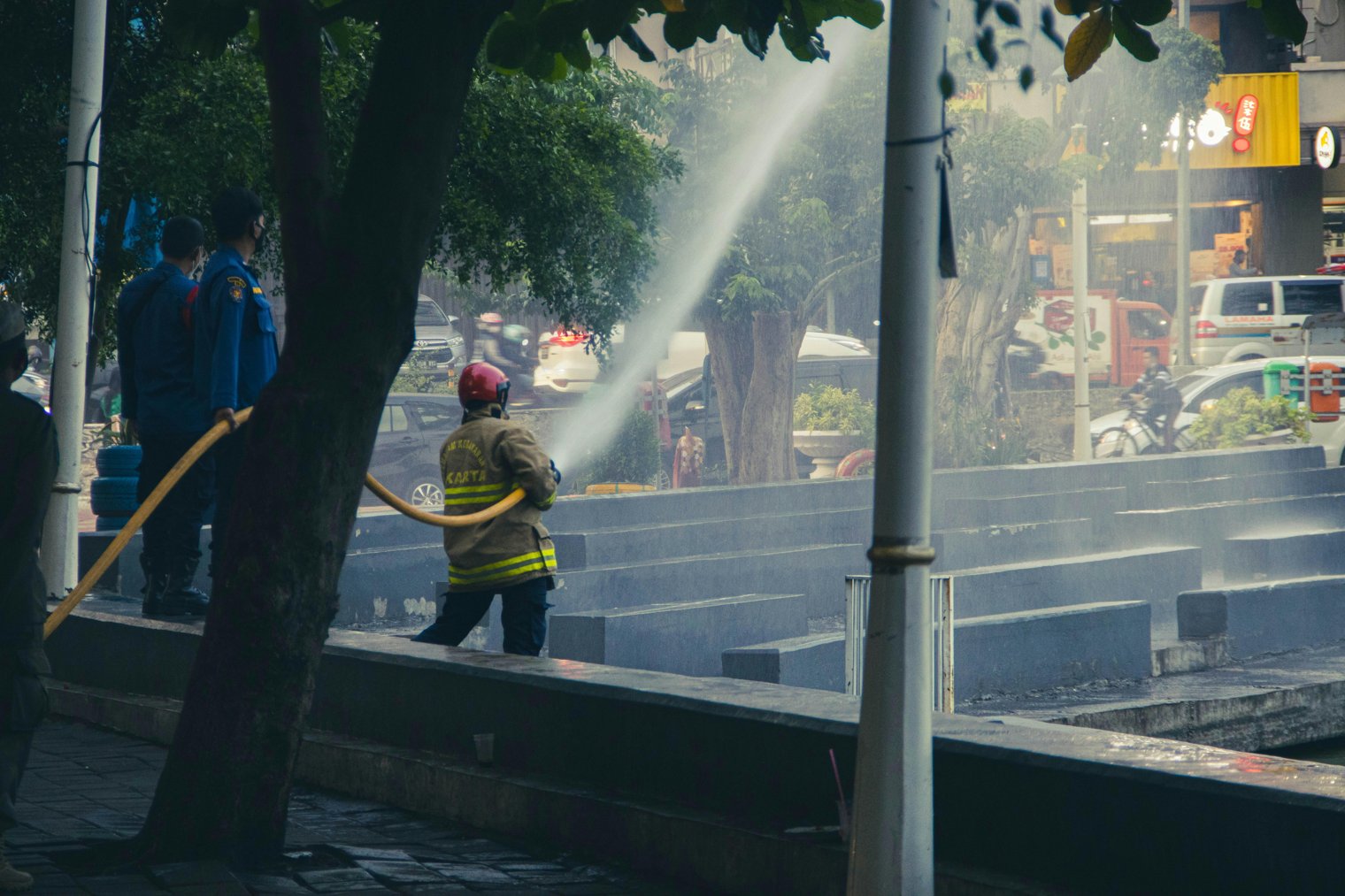
Safety first be prepared, stay calm, and follow the emergency procedures.
A fire drill at the office is designed to prepare employees for a real emergency. It tests your response time, knowledge of safety procedures, and ability to evacuate calmly. As the alarm sounds, employees are expected to follow evacuation protocols, head to designated exits, and gather at the assembly point. This scenario provides a detailed overview of how to efficiently participate in a fire drill, ensuring everyone’s safety and readiness.
10:00 AM: The fire drill alarm goes off, and employees pause their tasks, preparing for evacuation.
10:05 AM: Employees exit their offices and head toward the nearest exit as per their assigned routes.
10:10 AM: The building is cleared, and everyone gathers at the designated assembly point to wait for further instructions.
10:15 AM: The safety officer verifies attendance and provides a debrief on the drill's performance.
10:30 AM: The all-clear signal is given, and employees return to their workstations.
Office Building, Midtown Manhattan (NY)
Overview: A large corporate office building with multiple floors, clearly marked evacuation routes, and designated assembly areas.:
Landmarks: Main entrance, stairwells, fire exits, and assembly point in the parking lot.:
Tips: Familiarize yourself with the evacuation routes and the location of fire extinguishers before the drill.:
Corporate Headquarters, San Francisco (CA)
Overview: A tech company office with state-of-the-art safety features, including automated fire alarms and secure evacuation doors.:
Landmarks: Exit signs, designated fire warden stations, and outdoor assembly area.:
Tips: Pay attention to your assigned fire warden's instructions during the drill for a smooth evacuation.:
Overview: A healthcare facility with emergency drills conducted regularly to ensure the safety of both staff and patients.:
Landmarks: Evacuation routes are marked, with hospital personnel assigned to help direct patients and visitors.:
Tips: As healthcare facilities often have different evacuation procedures, always stay with the assigned group leader.:
500 5th Avenue (New York City, NY): Office building with emergency procedures and regular fire drills.
The Willis Tower (Chicago, IL): A famous high-rise with a detailed fire safety plan and evacuation protocol.
Brookfield Place (New York City, NY): Large office complex with monthly fire drills and comprehensive safety features.
Salesforce Tower (San Francisco, CA): Office tower known for its stringent fire safety measures and regular evacuation drills.
Empire State Building (New York City, NY): Iconic skyscraper with scheduled fire drills for tenants.
One World Trade Center (New York City, NY): Tallest building in the U.S. with structured emergency preparedness programs.
Prudential Tower (Boston, MA): Office complex with clear evacuation routes and regular fire drills.
Bank of America Plaza (Chicago, IL): Commercial office space with detailed fire safety systems.
AT&T Corporate Offices (Dallas, TX): Corporate headquarters with frequent fire drills to ensure employee safety.
The Pentagon (Washington, D.C.): Government building conducting periodic drills to prepare for emergencies.
Googleplex (Mountain View, CA): Corporate office with extensive fire safety drills for employees.
Facebook HQ (Menlo Park, CA): Offices with emergency procedures and fire drill training for new hires.
Amazon Headquarters (Seattle, WA): Known for implementing efficient evacuation drills in its tech facilities.
Microsoft Campus (Redmond, WA): Regular fire drills for employees working in the massive tech complex.
Apple Park (Cupertino, CA): Modern office space with comprehensive fire safety training.
United Nations Headquarters (New York City, NY): International building with detailed evacuation routes and periodic drills.
Los Angeles City Hall (Los Angeles, CA): Government building with thorough safety measures and regular fire drills.
Chicago Mercantile Exchange (Chicago, IL): Financial institution with well-planned fire evacuation routes.
The White House (Washington, D.C.): U.S. government building known for its well-organized evacuation protocols.
NASA Johnson Space Center (Houston, TX): Space agency with specific fire drill routines for its astronauts and staff.
IBM Headquarters (Armonk, NY): Tech company with bi-annual fire drills for all employees.
PNC Plaza (Pittsburgh, PA): Office complex with rigorous fire safety drills for tenants.
Prudential Center (Boston, MA): Corporate complex with focused fire safety measures and consistent drills.
Google Chicago Office (Chicago, IL): Tech hub offering regular safety drills.
Citigroup Center (New York City, NY): Skyscraper with ongoing employee training for safety drills.
Workplace Safety, Emergency Preparedness, Team Collaboration, Communication, Calm Under Pressure
1. Google: Safety Procedures for Employees
2. Microsoft: Corporate Safety Protocols
3. Amazon: Workplace Fire Safety
4. Apple: Emergency Training for Staff
5. Tesla: Fire Safety in Manufacturing Facilities
6. LinkedIn: Corporate Learning & Safety Tips
7. Zoom: Virtual Fire Drill Simulations
8. Slack: Team Communication During Drills
9. Evernote: Note-Taking for Fire Safety Procedures
10. Basecamp: Project Management During Crisis
11. Canva: Designing Safety Instructions
12. Adobe: Creating Safety Training Documents
13. Evernote: Organizing Fire Safety Notes
14. Dropbox: File Sharing for Safety Procedures
15. Asana: Task Management During Drills
16. Trello: Evacuation Plans
17. Zoom: Virtual Evacuation Drills
18. Hootsuite: Social Media Emergency Updates
19. Microsoft Teams: Team Collaboration During Emergencies
20. Fire Safe Europe: Fire Safety Standards
21. The National Fire Protection Association: NFPA
22. OSHA: Occupational Safety and Health Administration
23. Red Cross: Emergency Preparedness Resources
24. FEMA: Federal Emergency Management Agency
25. SAP: Safety Procedures Software
26. Veeva: Safety & Compliance Software
1. LinkedIn: Research corporate fire safety policies and connect with other safety experts.
2. Google Meet: Schedule fire drill preparation meetings.
3. Zoom: Set up remote evacuation drills for offsite employees.
4. Canva: Design fire safety infographics for workplace awareness.
5. Microsoft Teams: Share evacuation plans and schedules with employees.
6. Slack: Coordinate fire drill logistics with team members.
7. Asana: Track fire drill preparation tasks.
8. Dropbox: Share fire safety protocols with staff.
9. Office Depot: Purchase necessary supplies like evacuation maps and emergency kits.
10. Amazon: Order fire extinguishers and emergency flashlights for your office.
• Fire Drill Evacuation Map:
• First Aid Kit:
• Fire Safety Equipment (e.g., Fire Extinguisher, Smoke Detectors):
• Emergency Contact List:
• Portable Battery Packs:
• Work Identification Badge:
• Flashlight (for dark stairwells):
• Mobile Phone for Emergency Communication:
• Evacuation Shoes (Comfortable footwear for a quick exit):
• Water Bottle (for hydration):
• First Alert Smoke Detector (For ensuring office-wide fire safety)
• Kidde Fire Extinguisher (Portable safety device for offices)
• Amazon Echo (For emergency alerts)
• Fitbit (For tracking steps during evacuation drills)
• Jabra Headset (For clear communication during virtual drills)
• Confusion During Evacuation: Some employees might be unsure about the fastest exit routes.
• Time Consuming: Fire drills can take time away from work.
• Resistance: Employees may not take drills seriously.
• Disruption: Fire drills can disrupt meetings or workflow.
• Employee Anxiety: The loud alarm may cause panic among employees.
• Limited Space: Crowded exits can slow down the process.
• False Alarms: Drills may desensitize employees to real emergencies.
Reviewing Evacuation Routes Regularly
Staying Calm During Emergencies
Participating in Fire Drills Actively
Keeping Workspaces Neat for Quick Access During Evacuations
Following Up on Drill Feedback
Updating Safety Protocols as Needed
Practicing Personal Safety Measures Regularly
• Return to Workstations: Once the drill is over, proceed with the usual work tasks.
• Reflect on Drill Performance: Review what went well and what could be improved.
• Participate in Follow-Up Training: Take part in additional safety training sessions.
• Revise Safety Procedures: Based on feedback, update evacuation protocols and procedures.
• Provide Feedback: Offer suggestions for improving the next fire drill.
Events
You must log in to add an event.
Events for this Scenario
No events found for this scenario yet.
Experiences
Please log in to share your experience.