
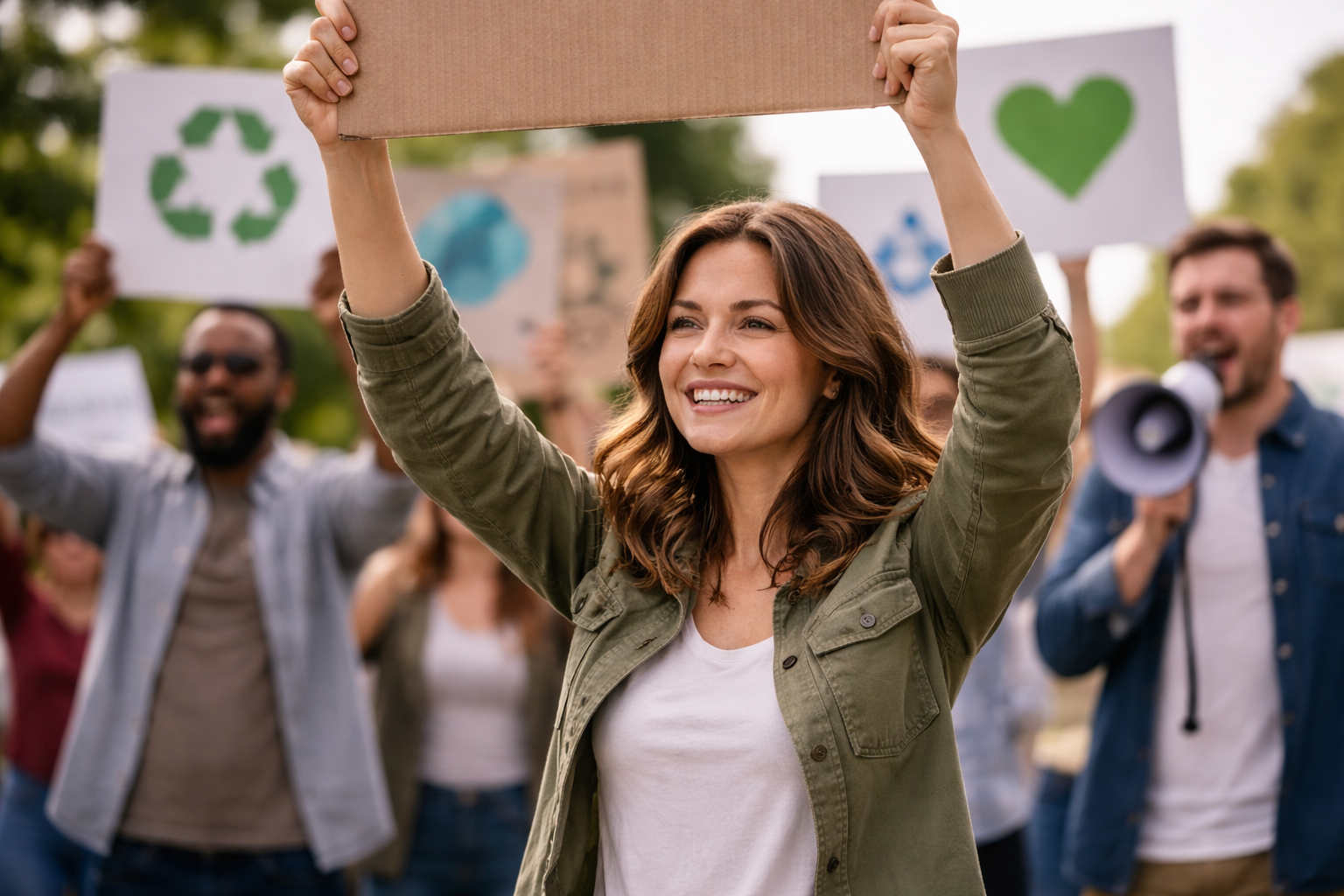
Stand up, speak out make your cause resonate with every step.
As a concerned citizen, you’ve decided to take part in a peaceful protest for a cause you feel strongly about. Whether it's advocating for civil rights, environmental issues, or social justice, the act of protesting allows you to express your beliefs in the public sphere. You join a group of like-minded individuals in a designated area, peacefully holding signs, chanting, and making a collective statement about the cause. Your goal is to raise awareness, show solidarity, and urge change, all while adhering to non-violent principles.
8:30 AM: Arrive at the rally point, where you see fellow protesters beginning to gather.
9:00 AM: The protest officially begins, with speakers addressing the crowd and calling for action.
11:30 AM: A break in the protest, where people gather to talk, share ideas, and build connections.
2:00 PM: The crowd begins marching, signs held high, as the peaceful demonstration continues down the street.
5:00 PM: The protest wraps up, and participants begin to disperse, reflecting on the day’s impact.
City Hall Plaza (San Francisco, CA)
Overview: The central meeting point for political protests and social justice events in the heart of the city.:
Landmarks: The City Hall building, a large open space, and the iconic palm trees lining the plaza.:
Tips: Arrive early to find a good spot and be ready for speeches that will kick off the event.:
Washington D.C. National Mall (Washington, D.C.)
Overview: The site of many historical protests and civil rights movements, where millions have gathered to make their voices heard.:
Landmarks: The Lincoln Memorial, the Washington Monument, and the U.S. Capitol building.:
Tips: This space is massive, so plan ahead to know where the gathering point will be. Bring water and sunscreen for comfort during the long hours in the sun.:
Overview: A green space in Portland known for hosting peaceful demonstrations on issues like climate change, racial equality, and local policy change.:
Landmarks: The park's large open field, community center, and nearby urban areas.:
Tips: Use the park as a place to peacefully organize and gather before marching to the next event location.:
Foley Square (New York, NY)
Liberty Plaza (Los Angeles, CA)
Hyde Park (London, England)
Piazza del Popolo (Rome, Italy)
Victoria Park (Hong Kong)
Zuccotti Park (New York, NY)
Los Angeles City Hall (Los Angeles, CA)
Parliament Square (London, UK)
Trafalgar Square (London, UK)
Tokyo Dome (Tokyo, Japan)
Plaza de la Constitución (Mexico City, Mexico)
Park Lane (Sydney, Australia)
Tiananmen Square (Beijing, China)
Union Square (San Francisco, CA)
Bryant Park (New York, NY)
College Green (Dublin, Ireland)
State House (Boston, MA)
The Capitol (Washington, D.C.)
Golden Gate Park (San Francisco, CA)
Lincoln Park (Chicago, IL)
Daley Plaza (Chicago, IL)
L.A. Memorial Coliseum (Los Angeles, CA)
U.S. Capitol Building (Washington, D.C.)
Central Park (New York, NY)
Rittenhouse Square (Philadelphia, PA)
Activism
Social Justice
Non-Violent Protest
Community Unity
Civic Responsibility
1. Civil Rights Organization: ACLU
2. Non-Profit Advocacy Group: Sierra Club
3. Voter Registration Platform: Rock the Vote
4. Social Media for Campaigns: Facebook
5. Event Organizing Tool: Eventbrite
6. Campaign Fundraising Platform: GoFundMe
7. Social Justice Apparel: T-shirt printing, Zazzle
8. Phone Banking Software: CallHub
9. Legal Support for Protesters: National Lawyers Guild
10. Political Campaign Organization: Democratic National Committee
11. Non-Violent Protest Gear: Patagonia
12. Activism Gear Store: Etsy
13. Political Consulting Firm: BlueLabs
14. Protest Recording App: Documenting Events via Smartphone
15. Public Transit Service: Uber, Lyft
16. Street Protest Guide: Wikipedia
17. Instagram: Social Media for Social Justice
18. Political Merchandise Store: Redbubble
19. Streetwear Clothing Brand: Nike
20. Speech Writing Services: Fiverr
21. Outdoor Rally Supplies: REI
22. Social Media Advocacy Platform: Change.org
23. Advocacy Writing Platform: Medium
24. Campaign Gear: CustomInk
25. Legal Advice: LegalZoom
26. Political News Outlet: Politico
27. Outdoor Protest Equipment: Amazon
28. Local Community Center: YMCA
29. Political Rally Organizer: Social Tables
30. Grassroots Campaign Tool: Mobilize
31. Advocacy Event Space: Meetup
32. Interactive Protest Map: Google Maps
33. Campaign Email Platform: Mailchimp
34. Street Protest Organization: Anonymous
35. Local Community Groups: Nextdoor
36. Clothing Store for Rally Gear: H&M
37. Protest Legal Support: ProtestLegal.org
38. Street Photography: Snapchat
39. Fundraising for Social Causes: Kickstarter
40. Direct Action Campaign: IndieGoGo
41. International Campaign: Avaaz
42. Audio Equipment: Bose
43. Political Event Radio: Podcasts
44. Voter Mobilization App: VoteBuilder
45. Protest Art: Redbubble
46. Advocacy Training: Public Allies
47. Political Awareness App: i360
48. Newspaper: The New York Times
49. Community Activism Portal: Progressive Web Apps
50. Social Media Platform for Social Causes: Twitter
1. Design T-shirts and posters (CustomInk)
2. Register to vote (Rock the Vote)
3. Sign up for local protest training (Eventbrite)
4. Print out protest signs (FedEx)
5. Secure transportation (Uber or Lyft)
6. Gather friends and organize a carpool (Google Maps)
7. Build your protest kit (REI)
8. Purchase outdoor clothing for rallies (Patagonia)
9. Set up a donation page (GoFundMe)
10. Create a digital campaign (Facebook)
• Patagonia Jackets (for protest gear)
• iPhone (for capturing moments and staying in touch)
• Nike Sneakers (for comfortable walking)
• Bose Headphones (for blocking out distractions)
• GoPro (for documenting protests)
Events
You must log in to add an event.
Events for this Scenario
No events found for this scenario yet.
Experiences
Please log in to share your experience.