
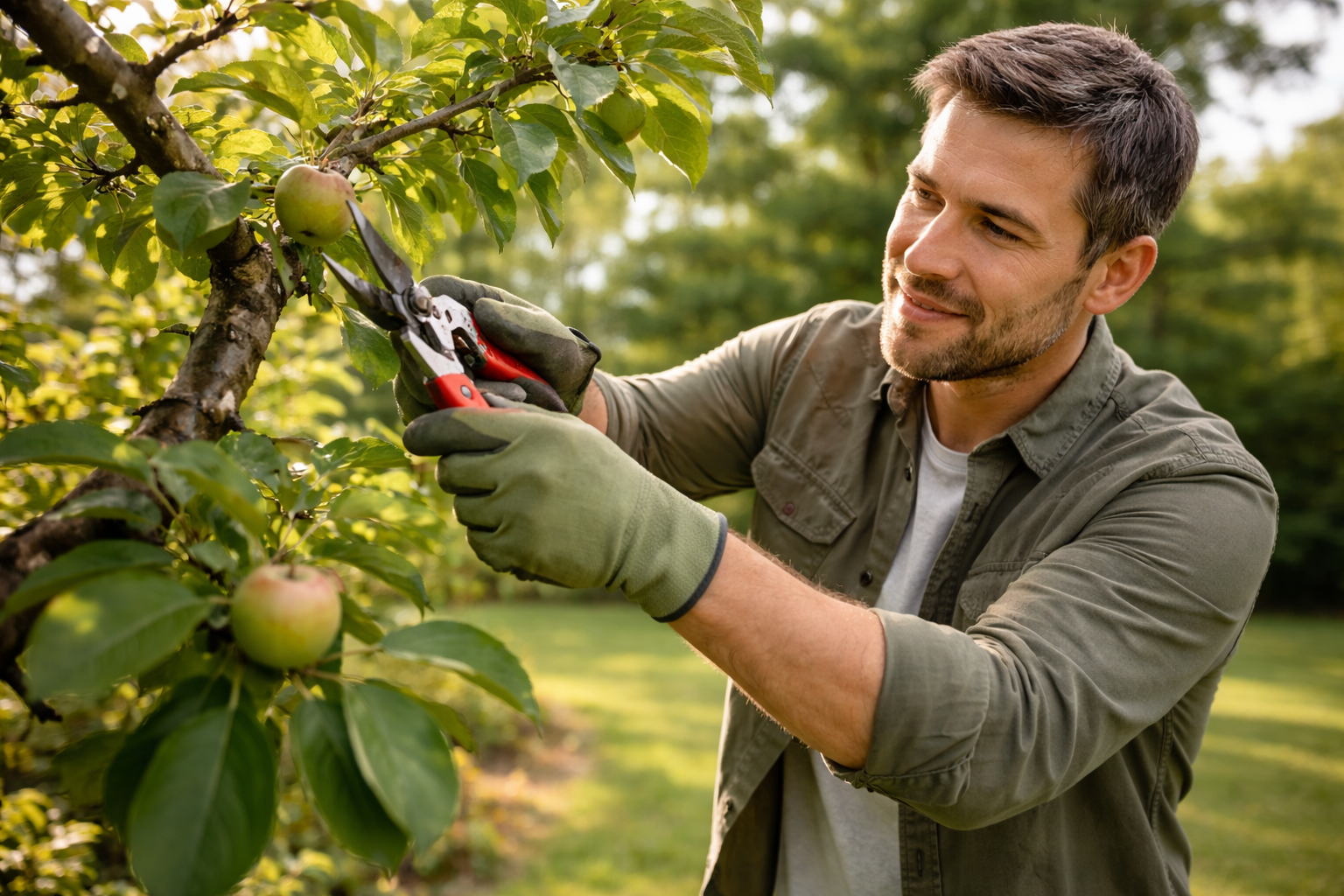
Shape your tree, shape your harvest boost fruit production with careful pruning.
Pruning a fruit tree is more than just cutting away branches. It’s a critical task that enhances the tree’s health, encourages higher fruit yields, and shapes the tree’s structure for optimal sunlight exposure and air circulation. Whether you’re maintaining an orchard or caring for a single tree in your backyard, learning the best pruning techniques will ensure healthy growth and bountiful harvests. This page will guide you through the steps, tools, and timing for pruning to get the most out of your fruit tree.
9:00 AM: Gather pruning tools: shears, loppers, gloves, and a ladder.
9:30 AM: Inspect the tree, identify dead or overcrowded branches to cut.
10:00 AM: Begin pruning, removing small branches and thinning dense growth.
10:45 AM: Check for any broken or diseased branches to remove completely.
11:15 AM: Finish pruning, clean tools, and give the tree a final inspection.
Orchard - Apple Orchard (Yakima Valley, WA)
Overview: Known for its vast rows of apple trees, this orchard serves as a prime example of effective fruit tree pruning.:
Landmarks: Rows of apple trees, pruning stations, and harvest bins.:
Tips: Take your time and focus on removing the old growth to allow new branches to flourish.:
Fruit Tree Nursery - Stark Bro's Nursery & Orchards (Louisiana, MO)
Overview: A nursery focused on fruit tree health, offering expert advice on proper pruning techniques.:
Landmarks: Rows of fruit trees, demonstration areas for pruning, and helpful signage.:
Tips: Learn from the professionals on the proper tools and techniques for each fruit tree variety.:
Vineyard - Napa Valley (Napa, CA)
Overview: While primarily a wine grape producer, the pruning techniques here apply to fruit trees in general, especially in maintaining healthy branches for maximum yield.:
Landmarks: Vine rows, pruning tool stations, and guides for seasonal maintenance.:
Tips: Prune to maintain a healthy framework, making sure to keep the tree balanced for an abundant harvest.:
Peach Orchard (Georgia): Famous for its high yield and well-pruned peach trees.
Pear Orchard (California): Pruned to maintain tree health and improve fruiting.
Cherry Orchard (Traverse City, MI): Cherry trees expertly pruned for consistent annual harvest.
Plum Orchard (Spokane, WA): Demonstrates pruning to enhance fruit size and quality.
Kiwi Vineyard (Hawaii): Pruning kiwi vines for better airflow and increased fruit production.
Apricot Orchard (Oregon): Pruning for improved sun exposure and fruit ripening.
Citrus Grove (Florida): Pruning methods to prevent overgrowth and disease in citrus trees.
Pomegranate Grove (California): Pruning practices that ensure high yields of sweet, juicy fruit.
Olive Grove (Tuscany, Italy): Famous for pruning techniques that maintain olive tree health and fruit production.
Mango Orchard (Maui, HI): Pruning techniques that reduce the risk of disease and encourage larger fruit.
Almond Orchard (California): Pruning for healthier trees and better nut production.
Avocado Grove (San Diego, CA): Pruning to control tree size while boosting fruit production.
Fig Orchard (New Mexico): Pruning to help fig trees thrive in a desert climate.
Nectarine Orchard (Washington): Pruning methods to increase fruit size and quality.
Persimmon Orchard (Kentucky): Pruning techniques for fruit trees in colder climates.
Apple Orchard (Hood River, OR): Exemplary tree care and pruning techniques for high apple yield.
Walnut Grove (California): Expert pruning to reduce competition for nutrients between branches.
Citrus Orchard (Arizona): Pruning for optimal yield and pest control.
Tropical Fruit Grove (South Florida): Pruning of exotic fruit trees to encourage large harvests.
Cherry Plum Orchard (Michigan): Pruning for cross-pollination and higher yields.
Olive Orchard (Greece): Ancient pruning techniques that maintain tree strength and fruit quality.
Mulberry Orchard (Mississippi): Pruning to prevent overcrowding and promote better fruit production.
Walnut Orchard (Indiana): Pruning for healthy tree growth and improved nut production.
Blueberry Patch (North Carolina): Pruning for better bush growth and berry production.
Raspberry Patch (Michigan): Pruning methods that help raspberry canes grow vigorously and produce fruit.
Gardening, Agricultural Knowledge, Sustainability, Fruit Cultivation, Outdoor Work.
1. Stark Bro’s Nursery & Orchards: Fruit Tree Nurseries
2. Home Depot: Pruning Tools & Equipment
3. Lowe’s: Garden Pruning Supplies
4. Amazon: Pruning Shears, Gloves, and Tools
5. Tractor Supply Co.: Farm & Garden Equipment
6. The Tree Care Industry Association: Tree Pruning Certification
7. Urban Farm Fertilizers: Soil Fertilizer and Tree Care
8. Fine Gardening Magazine: Gardening Knowledge
9. Gardeners Supply Company: Garden Tools & Pruning Kits
10. Burpee Seeds: Fruit Tree Varieties
11. TreeWorld: Professional Tree Pruning Services
12. The Arbor Day Foundation: Tree Planting & Pruning Resources
13. Bonnie Plants: Garden Planting & Care Tips
14. Edible Landscaping: Sustainable Gardening Practices
15. Fiskars: Pruning Shears & Gardening Tools
16. Walmart: Gardening Equipment & Tools
17. Ace Hardware: Home Gardening Tools
18. Greenhouse Megastore: Tree Care Supplies
19. Arborist Store: Professional Arborist Tools
20. Horizon Distributors: Garden Equipment & Supplies
21. Pruning Solutions: Expert Pruning Tips & Tools
22. Dave Wilson Nursery: Fruit Trees
23. Arboricultural Association: Tree Care & Pruning Certification
24. Southern Exposure Seed Exchange: Fruit Tree Seeds & Plants
25. Organic Gardening Store: Soil & Plant Care Products
26. National Gardening Association: Gardening Resources
27. World’s Best Trees: Certified Tree Care Services
28. Garden Club of America: Tree Pruning & Education
29. Tree Care Experts: Tree Health & Pruning Services
30. Oakleaf Landscaping: Landscaping and Pruning Services
31. North American Fruit Explorers: Fruit Tree Education
32. Permaculture Research Institute: Sustainable Pruning Techniques
33. National Forest Service: Pruning and Forest Management
34. Real World Gardening: Gardening Solutions for Homeowners
35. Napa Valley Vineyards: Vineyard Pruning
36. Simple Grow Gardening: Home Gardening Tips
37. Precision Pruning Services: Tree Pruning Solutions
38. Eco Gardening: Sustainable Fruit Tree Care
39. Sustainable Gardening Store: Tools for Eco-Friendly Pruning
40. Landscaping Supply Co.: Pruning and Landscaping Equipment
41. Meyer Lemon Grove: California
42. Fruit Tree Nursery: Massachusetts
43. Organic Farm & Garden Center: Tree Pruning Resources
44. Permaculture Design: Pruning for Better Yields
45. Local Garden Stores: Pruning Shears and More
46. Fruit Tree Education: Fruit Tree Pruning Workshops
47. Master Gardener Association: Gardening Education
48. GreenThumb Gardening: Pruning & Plant Care
49. Urban Soil Solutions: Healthy Soil and Tree Care
50. Community Garden Center: Fruit Tree Care Programs
1. Home Depot: Pruning tools and gloves.
2. Lowe’s: Purchase pruning shears, loppers, and tree care equipment.
3. Amazon: Order pruning shears, step ladders, and safety gear.
4. REI: Durable workwear and gloves for outdoor work.
5. Walmart: Buy plant food, pruning knives, and tree care supplies.
6. Ace Hardware: Get equipment for pruning and tree care.
7. Tractor Supply Co.: Purchase pruning saws and gardening supplies.
8. Greenhouse Megastore: Order tree care tools and fertilizers.
9. Fiskars: Get premium pruning shears for effective trimming.
10. Arbor Day Foundation: Educational resources on pruning and tree care.
• Pruning Shears:
• Gloves:
• Ladder (if needed):
• Pruning Saw:
• Tree Fertilizer:
• Safety Glasses:
• Gardening Journal:
• Bucket or Bag for Debris:
• Tree Stakes (if necessary):
• Tree Sealant (for larger cuts):
• Fiskars PowerGear2 Pruning Shears
• Felco 2 Pruning Shears
• The Greenhouse Megastore Pruning Kit
• Arborist Saw by Silky
• Lowe’s Tree Pruning Kit
• Improper Pruning: Cutting too much or the wrong branches can harm the tree.
• Tool Failure: Pruning shears or saws might break mid-task.
• Injury: Accidents can happen with sharp tools or ladders.
• Weather: Wind or rain can make pruning unsafe.
• Lack of Knowledge: Uninformed pruning may reduce fruit yields.
• Tree Stress: Over-pruning can cause stress and reduce growth.
• Invasive Species: Pruning without care can spread pests or diseases.
Always prune during the dormant season.
Clean tools between cuts to prevent disease spread.
Focus on cutting dead, damaged, or diseased branches.
Use sharp, clean tools for precise cuts.
Make clean cuts to avoid leaving jagged edges.
Prune to maintain a well-balanced tree structure.
Remove suckers and water sprouts as part of regular maintenance.
Final inspection of the tree after pruning.
Dispose of the pruned branches and clean the area.
Fertilize the tree after pruning to encourage new growth.
Take a break and monitor the tree for a few weeks to ensure recovery.
Keep track of the tree’s growth and future pruning needs in your gardening journal.
Events
You must log in to add an event.
Events for this Scenario
No events found for this scenario yet.
Experiences
Please log in to share your experience.