
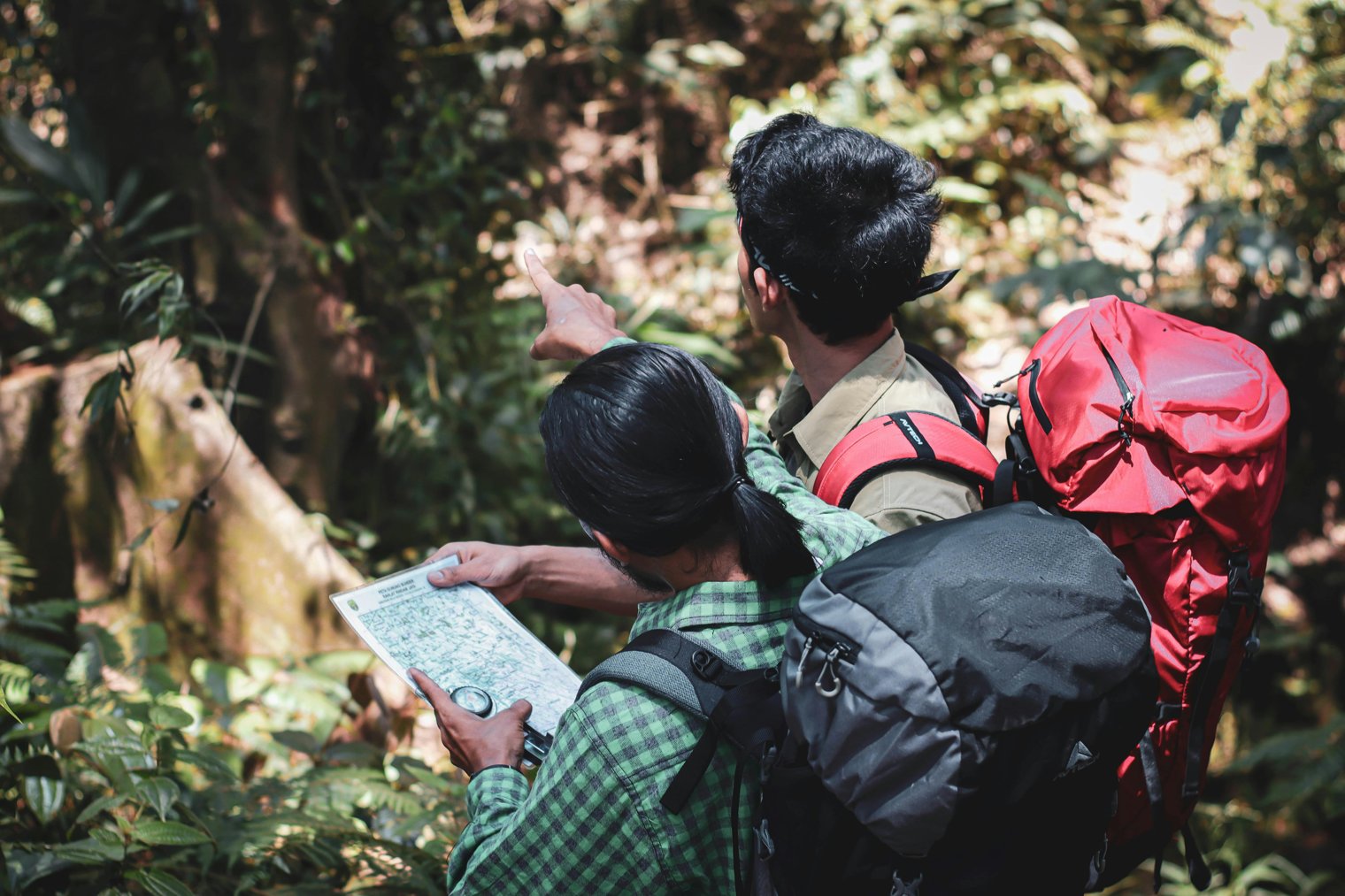
Navigate the wild mastering the art of map and compass reading.
Reading a map and compass is an essential survival skill for hikers and outdoor enthusiasts. It allows you to orient yourself in the wilderness and navigate through unfamiliar terrain. This scenario helps you understand how to read topographic maps, use a compass, and combine both tools to find your way safely.
8:00 AM: You arrive at the trailhead, with the trail map in hand and compass ready for the journey.
9:30 AM: After a few miles of hiking, you stop to check your location using the map and compass to make sure you're on the right path.
12:00 PM: You pause for a break and recalibrate your position, carefully aligning the compass to orient yourself with the terrain.
2:00 PM: While navigating through a forested area, you check your progress against the map, ensuring the compass readings align with known landmarks.
4:30 PM: As you reach the summit, you double-check your navigation to ensure you’ve reached your intended destination.
Zion National Park (Utah, USA)
Overview: Known for its stunning canyons and sandstone cliffs, Zion is a favorite for hikers and explorers.
Landmarks: Angel's Landing, The Narrows, Kolob Canyons.
Overview: A world-renowned natural wonder with expansive views and rugged trails that require careful navigation.
Landmarks: South Rim, Bright Angel Trail, Colorado River.
Rocky Mountain National Park (Colorado, USA)
Overview: High-altitude terrain with diverse ecosystems and remote wilderness areas to explore.
Landmarks: Longs Peak, Bear Lake, Trail Ridge Road.
Mount Rainier National Park (Washington, USA)
Yosemite National Park (California, USA)
Denali National Park (Alaska, USA)
Glacier National Park (Montana, USA)
Great Smoky Mountains National Park (Tennessee/North Carolina, USA)
Sequoia National Park (California, USA)
Shenandoah National Park (Virginia, USA)
Bryce Canyon National Park (Utah, USA)
Acadia National Park (Maine, USA)
Isle Royale National Park (Michigan, USA)
Death Valley National Park (California/Nevada, USA)
Olympic National Park (Washington, USA)
Everglades National Park (Florida, USA)
Joshua Tree National Park (California, USA)
Big Bend National Park (Texas, USA)
Grand Teton National Park (Wyoming, USA)
Canyonlands National Park (Utah, USA)
Arches National Park (Utah, USA)
White Mountains National Forest (New Hampshire, USA)
Kings Canyon National Park (California, USA)
Lassen Volcanic National Park (California, USA)
Rocky Mountain National Park (Colorado, USA)
Flathead Lake (Montana, USA)
Adirondack Mountains (New York, USA)
Columbia River Gorge (Oregon/Washington, USA)
Olympic Peninsula (Washington, USA)
Navigation, Adventure, Survival Skills, Wilderness, Exploration
1. REI: Outdoor Gear Retailer
2. Garmin: GPS and Navigation Devices
3. Compass Center: Navigation Courses
4. Backcountry: Outdoor Gear
5. National Park Service: U.S. National Parks
6. Cabela’s: Outdoor Equipment
7. Patagonia: Outdoor Apparel
8. Sawyer: Water Filters and Outdoor Gear
9. BioLite: Camping and Navigation Gear
10. Mountain Hardwear: Outdoor Gear
11. Black Diamond: Climbing and Navigation Gear
12. Osprey: Backpacks
13. MSR: Outdoor Equipment
14. LifeStraw: Water Filtration Products
15. Yeti: Outdoor Gear and Hydration
16. The North Face: Outdoor Apparel
17. Outdoor Research: Outdoor Clothing and Gear
18. Garmin InReach: Satellite Communicators
19. Columbia Sportswear: Outdoor Gear
20. Sea to Summit: Camping and Hiking Gear
21. Coleman: Camping and Hiking Equipment
22. Big Agnes: Camping Gear
23. EcoFlow: Portable Power
24. The Trailhead: Outdoor Retail Store
25. MEC: Mountain Equipment Co-op
26. Outdoor Adventures: Tourism and Adventure Planning
27. GoPro: Adventure Cameras
28. Outdoor Survival School: Survival Training
1. REI: For purchasing navigational tools like maps and compasses.
2. Amazon: For online purchases of outdoor navigation gear.
3. Backcountry: For buying compasses and topographic maps.
4. Garmin: For GPS devices that can be used as a supplement to map and compass.
5. National Park Visitor Centers: For getting physical trail maps of hiking areas.
6. Cabela’s: For outdoor gear and navigation tools.
7. MEC (Mountain Equipment Co-op): For purchasing high-quality map and compass gear.
8. Outdoor Research: For clothing that supports outdoor navigation.
9. LifeStraw: For carrying portable water filters for outdoor activities.
10. Garmin InReach: For satellite communication while hiking in remote areas.
• Topographic Map (of the hiking area):
• Compass (magnetic or digital):
• Water Bottle (to stay hydrated during hikes):
• First Aid Kit (for emergencies):
• Hiking Boots (for rugged terrain):
• Waterproof Map Case (to protect your maps):
• Sunscreen (for protection during outdoor activities):
• Notebook and Pen (for taking notes or marking locations):
• Headlamp (for evening navigation):
• Snacks (for energy during your hike):
• Garmin (GPS Devices)
• Silva (Compass Manufacturer)
• REI Co-op (Outdoor Gear Retailer)
• Topo Maps (Topographic Maps)
• LifeStraw (Portable Water Filters)
• Limited Visibility: Dense forests or mountainous terrain can make map reading difficult.
• Weather Conditions: Bad weather can obscure landmarks and make compass readings less accurate.
• Inaccurate Maps: Old or poorly marked maps can lead to confusion in unfamiliar terrain.
• Losing Orientation: In tricky terrain, it’s easy to become disoriented even with a compass and map.
• Complex Terrain: Mountains or valleys can make it difficult to properly orient your map.
• Navigation Fatigue: Continuous map reading and compass use can become tiring on long hikes.
• Equipment Malfunction: If your compass breaks or you lose your map, navigation becomes significantly harder.
Always double-check your compass bearings.
Pause periodically to assess your surroundings with the map.
Take note of prominent landmarks to help with orientation.
Keep a steady pace to avoid fatigue that could impair your navigation skills.
Always plan your route ahead of time and carry a backup map.
Use a wrist strap for your compass to avoid losing it.
Keep your map in a protective case to prevent water damage.
After reaching your destination, make sure to pack away your map and compass properly.
If you’re at the trailhead, check your navigation one last time to ensure a safe return.
If you’re off the trail, orient your compass to head back to a known location.
Before leaving the hiking area, ensure all navigational tools are accounted for.
Reflect on the route you took, noting areas of difficulty for future reference.
Events
You must log in to add an event.
Events for this Scenario
No events found for this scenario yet.
Experiences
Please log in to share your experience.