
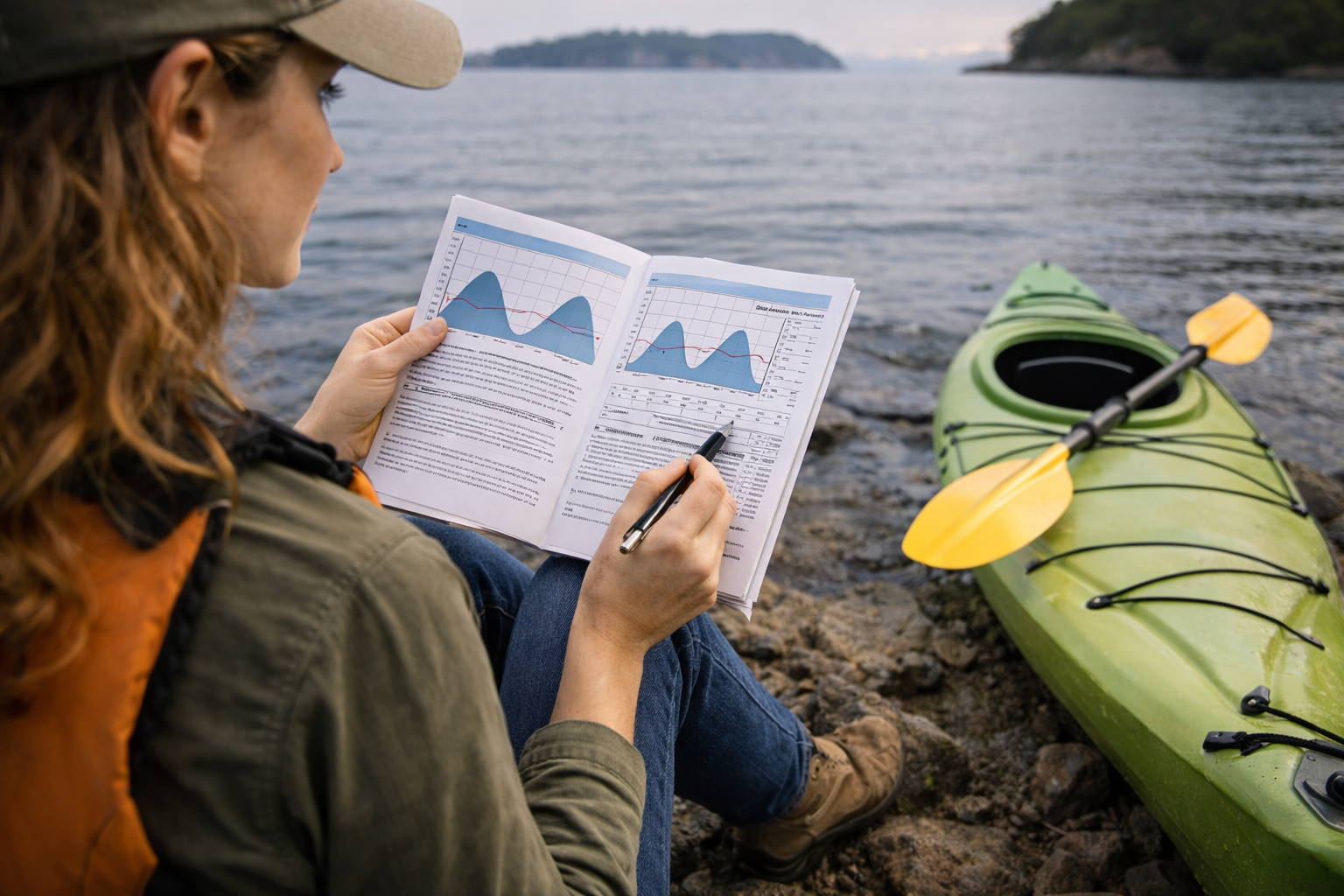
Plan your paddle with precision know the tides, know the sea.
Reading a tide chart is an essential skill for sea kayakers. The chart provides critical information about when the tides will be high or low, as well as when the current will be strong or weak. By understanding these patterns, paddlers can avoid dangerous conditions and ensure a smooth, enjoyable ride. In this scenario, you'll learn how to read a tide chart and interpret the data to plan a successful kayaking route. This skill is especially important for coastal and open-water kayaking, where tides can dramatically affect the paddler’s experience.
7:30 AM: You arrive at the shore, the tide chart in hand, ready to plan your kayaking trip for the day.
7:35 AM: You examine the tide chart, noting the high and low tide times for the day.
7:40 AM: You calculate the best time to launch, avoiding strong currents during peak high tide.
7:45 AM: You double-check the wind forecast, ensuring that the current and wind conditions align for an enjoyable paddle.
7:50 AM: With the plan set, you begin to prepare your kayak, knowing the precise timing for a safe and optimal experience.
San Juan Islands (WA): Famous for sea kayaking, these islands rely heavily on understanding tide charts due to strong currents and shifting tides.
Everglades National Park (FL): A water-based park where the tides significantly impact kayaking routes and timing for access to various areas.
Point Reyes National Seashore (CA): Coastal kayaking routes that require precise knowledge of the tide schedule to navigate safely through the area's challenging waters.
San Juan Islands (WA): Known for its tidal waters and sea kayaking routes.
Everglades National Park (FL): Tides are crucial for kayakers in this coastal park.
Point Reyes National Seashore (CA): Coastal waters where tide patterns must be monitored.
Gulf Islands (BC): Known for tidal waters affecting kayak navigation.
Monterey Bay (CA): A tidal zone where kayakers must follow tide charts to navigate safely.
Maine Coastline (ME): Sea kayaking trips along the coast rely on understanding tide movements.
Puget Sound (WA): A vast area where understanding tides is crucial for safe paddling.
Channel Islands National Park (CA): Tide charts are essential for exploring the islands by kayak.
Great Barrier Reef (Australia): The tides influence kayaking routes and the best times to visit.
New Zealand Bay of Islands (NZ): Tidal conditions impact kayaking and paddling safety.
Baja California (Mexico): Sea kayaking in the region requires understanding tides and currents.
Charleston Harbor (SC): Coastal kayaking with tidal shifts that kayakers must account for.
Prince Edward Island (Canada): Kayaking in the bay demands knowledge of tide patterns.
Glacier Bay National Park (AK): Kayak routes in this area depend on tide charts to avoid unpredictable currents.
Kealakekua Bay (HI): Tidal changes impact kayaking routes through the bay.
Lofoten Islands (Norway): Known for kayaking in arctic waters, where tide charts play a significant role in planning routes.
Shetland Islands (Scotland): Sea kayaking with tides playing an important role in navigation.
Salish Sea (WA/BC): The currents are strong, and kayaking here requires a good understanding of tides.
Lake Tahoe (CA/NV): While not an ocean, kayaking requires awareness of local water levels and tides.
Galapagos Islands (Ecuador): Coastal kayaking trips depend on understanding the changing tides.
Cape Cod (MA): Kayakers rely on tide charts for safe and enjoyable trips through the region.
Loch Lomond (Scotland): Tidal influences can affect water levels and kayaking safety.
Chesapeake Bay (MD): The tides affect the water conditions for paddlers, making it essential to read tide charts.
Narragansett Bay (RI): Tidal fluctuations require kayakers to plan carefully.
Sea of Cortez (Mexico): Tidal timing is crucial for kayaking in this unique location.
Water Navigation
Sea Kayaking Safety
Outdoor Adventure
Timing & Preparation
Coastal Exploration
1. REI – Kayak accessories, gear, and maps for planning safe routes based on tides.:
2. Amazon – Tide charts and sea kayaking equipment for coastal paddling.:
3. Dick's Sporting Goods – Kayaking gear, including paddles, life jackets, and waterproof bags.:
4. Garmin – GPS devices to track kayaking routes and tides.:
5. Outdoor Research – Apparel for kayaking in all conditions.:
6. Patagonia – Waterproof and windproof gear for kayaking.:
7. National Oceanic and Atmospheric Administration: NOAA
8. NOAA Buoy Data – Real-time data on tides and weather conditions.:
9. Tide Clocks – Specialty clocks for keeping track of tide times in specific locations.:
10. NOAA Weather Radio – A reliable source for water and tide-related weather updates.:
11. Garmin inReach – Satellite communicators that work in remote areas.:
12. GoPro – Waterproof cameras to document kayaking adventures.:
13. Yellow Dog Kayaks – Kayaks and accessories for sea kayaking.:
14. REI Co-op – Guides and gear for kayaking trips.:
15. MarineTraffic – Tracking marine traffic and tide data for paddlers.:
16. MapMyRun – Useful for plotting out routes in advance and tracking tide timings.:
17. Wilderness Systems – Kayak rentals and sales with a focus on safety and navigation.:
18. Paddling.com – A resource for kayaking enthusiasts with tide charts.:
19. Sea Kayaker Magazine – A publication focused on sea kayaking, with a focus on tide-based planning.:
20. Red Cross – Water safety training for paddlers.:
21. MobiKat – Kayak rentals and tours in the coastal areas with tide-based planning.:
22. Swiftwater Rescue – Water rescue gear and safety courses.:
23. Jack’s Kayak Adventures – Guided kayaking tours that include tide management.:
24. Wilderness Medical Associates – First aid and emergency medical training for paddlers.:
25. Cape Cod Kayak – A kayak rental and guide company based in Cape Cod.:
26. Pelican Kayaks – Kayak manufacturing with tide-specific designs for kayakers.:
27. Aqua Bound – Paddles specifically designed for saltwater kayaking.:
28. NRS: National River Supply
29. Coastal Kayaks – Guided kayaking tours that teach tide and current navigation.:
30. Thule – Roof racks for transporting kayaks safely.:
31. Tidewater Kayaks – Sea kayaking gear for specific tidal conditions.:
32. Jackson Kayaks – Kayaks designed for sea kayaking with features for tide navigation.:
33. Canon – Camera equipment to capture kayaking experiences.:
34. YakAttack – Kayak accessories designed for marine and tidal environments.:
35. Eco-Kayak – Eco-friendly kayaking equipment for coastal paddling.:
36. Kraken Kayaks – Custom kayaks designed for sea paddling.:
37. The North Face – Outerwear for sea kayaking in various weather conditions.:
38. Aquabound – Kayak paddles designed to handle tidal waters.:
1. NOAA: Get accurate tide charts and water condition information for your kayaking trip.
2. Amazon: Buy tide clocks and charts for home or on the go.
3. Garmin: Prepare with a GPS device for safe kayaking navigation.
4. Dick's Sporting Goods: Purchase kayaking gear suited for coastal environments.
5. REI: Stock up on kayaking gear, including paddles and life jackets.
6. Sea Kayaker Magazine: Read up on the best routes based on tide conditions.
7. NRS: Ensure you have a well-prepared kayak with all necessary accessories.
8. NOAA Buoy Data: Stay updated with real-time tide data before you set out.
9. Yellow Dog Kayaks: Rent a kayak and check tide conditions before paddling.
10. GoPro: Prepare to capture your kayaking journey while navigating tides.
• Tide Chart:
• Kayak:
• Paddles:
• Life Jacket:
• GPS Device:
• Wet Suit (for cold waters):
• Dry Bags:
• First Aid Kit:
• Waterproof Camera:
• Sunscreen:
• GoPro HERO10 – Capture your kayaking adventure while monitoring tides.
• Garmin GPSMAP – Essential GPS for tracking your kayaking route and tides.
• Yellow Dog Kayaks – Popular kayaks designed for sea kayaking.
• NRS Life Jacket – Important for safety while paddling in tidal waters.
• Patagonia R1 Fleece – Ideal for layering during colder water conditions.
• Changing Tides: Unpredictable tides may cause delays.
• Limited Space: Kayaks have limited storage for all necessary equipment.
• Weather Conditions: Weather can affect both tides and water conditions.
• Tidal Confusion: Misreading tide times can lead to dangerous conditions.
• Cold Water: Kayaking in cold water without proper gear can lead to hypothermia.
• Remote Locations: Paddling in remote areas means limited access to help.
• Overcrowding: Popular kayaking spots can become crowded, especially during peak tides.
Always check the tide chart before heading out.
Double-check your kayak for safety before every trip.
Pack dry bags to keep electronics and essentials safe from water.
Regularly review tide schedules for your local paddling spots.
Use tide data to plan trips around calm waters.
Stay aware of shifting tides during your trip.
Make sure to have sufficient water and snacks for your kayaking journey.
Return to shore as the tide changes.
Seek shelter if tides or weather conditions worsen.
Practice navigating your kayak in tidal areas for future trips.
Join a group or take a guided trip for added support.
Review your kayaking techniques with instructors to improve safety.
Events
You must log in to add an event.
Events for this Scenario
No events found for this scenario yet.
Experiences
Please log in to share your experience.