
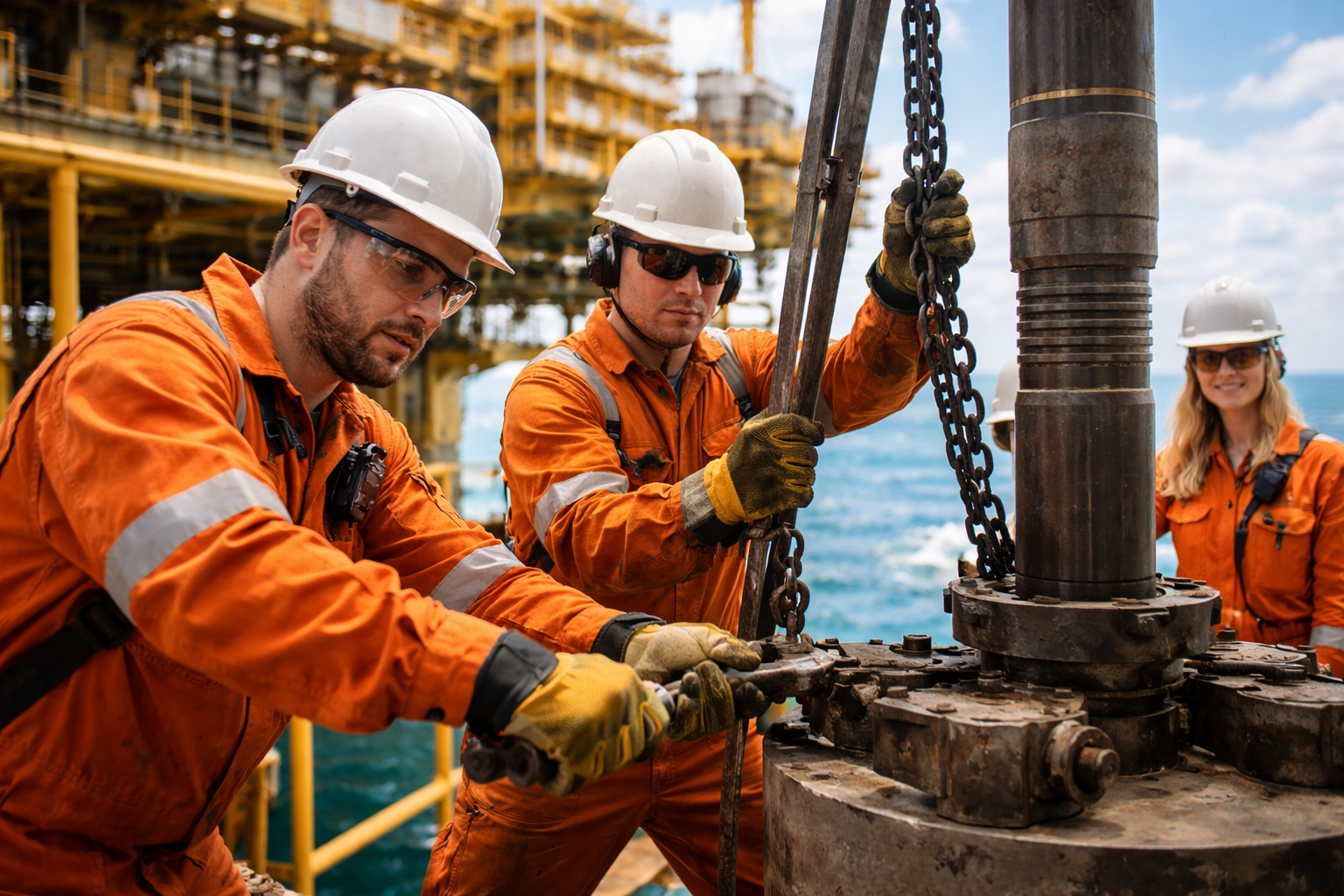
High above the waves, where safety, skill, and teamwork are key to success.
Working on an offshore oil rig is a demanding and high-risk job that requires technical expertise, physical stamina, and constant attention to safety. The rig is a self-contained environment in the middle of the ocean, where workers are responsible for maintaining the equipment, ensuring the safety of the platform, and assisting in the drilling and extraction of oil and gas. The environment is harsh, with strong winds, rough seas, and the potential for hazardous situations, but it also offers lucrative pay and valuable experience.
6:00 AM: The worker arrives at the rig after a long night shift. They check in with the team and prepare their equipment for the day’s operations.
6:30 AM: The worker joins the drilling crew, ensuring that all equipment is running smoothly before starting the drilling process.
7:00 AM: The rig begins its daily operations. Workers monitor pressure levels, check safety systems, and adjust drilling equipment.
12:00 PM: A break for lunch. The worker heads to the rig's mess hall to eat and relax before returning to the platform's maintenance tasks.
2:00 PM: The afternoon shift begins. The worker inspects the oil lines and checks the platform for any signs of leaks or malfunctioning equipment.
Offshore Oil Rig (North Sea, United Kingdom)
Overview: A floating platform used for offshore oil extraction, located miles away from shore.
Landmarks: Heavy machinery, oil extraction rigs, and massive storage tanks.
Gulf of Mexico Oil Rig (Deepwater Horizon Memorial, Gulf of Mexico, USA)
Overview: A historical location for offshore oil extraction, this region is known for its vast oil reservoirs and drilling platforms.
Landmarks: Large oil storage tanks, massive drilling pipes, and flare stacks.
Petrobras Oil Rig (Campos Basin, Brazil)
Overview: A floating production unit operated by Petrobras, one of the world's leading oil companies.
Landmarks: Offshore production unit, oil extraction equipment, and storage facilities.
North Sea Oil Fields (UK/Norway)
Gulf of Mexico Oil Rigs (Offshore USA)
Campos Basin (Brazil)
Santos Basin (Brazil)
Norwegian Sea Oil Platforms (Norway)
Bay of Bengal Oil Rigs (India)
Timor Sea (Australia/Indonesia)
South China Sea Oil Platforms (China)
Maracaibo Basin (Venezuela)
West Africa Offshore Platforms (Angola)
Bering Sea Offshore Oil Rigs (Alaska, USA)
Arctic Oil Rigs (Offshore Alaska, USA)
Caspian Sea Oil Fields (Azerbaijan)
Equatorial Guinea Offshore Rigs (Central Africa)
Offshore Australia (North West Shelf, Australia)
Oil Platform "Petrobras 40" (Campos Basin, Brazil)
Platform "Tupi" (Santos Basin, Brazil)
Oil Platform "Sevan 300" (North Sea)
Ekofisk Oil Field (Norwegian North Sea)
Zubair Oil Field (Iraq)
Jack-Up Rig "Noble Homer Ferrington" (Gulf of Mexico, USA)
Oil Platform "Charlie" (Alaska, USA)
Sea Eagle Platform (Caspian Sea, Kazakhstan)
Kizomba A Floating Production Unit (Angola)
Troll Oil Field (North Sea, Norway)
Tuna Field Oil Platforms (Western Australia)
Industrial operations, environmental safety, teamwork, oil extraction, maritime logistics.
1. BP: Energy and Oil Extraction
2. ExxonMobil: Oil and Gas Extraction
3. Royal Dutch Shell: Global Energy Company
4. Chevron: Energy and Oil Products
5. Total: Energy and Oil Exploration
6. Schlumberger: Oilfield Services
7. Halliburton: Oil and Gas Equipment & Services
8. Baker Hughes: Energy Technology and Solutions
9. Schlumberger: Oilfield Management
10. Seadrill: Offshore Drilling
11. Transocean: Offshore Drilling Services
12. Saipem: Engineering and Construction for Oil Platforms
13. Fluor: Offshore Oilfield Construction
14. Petrofac: Energy Services
15. Schlumberger: Oilfield Exploration
16. Global Energy Services: Offshore Oil Platforms
17. Inpex: Oil and Gas Company
18. JX Nippon Oil & Gas Exploration: Energy Sector
19. Maersk Oil: Offshore Oil Exploration
20. Keppel Offshore & Marine: Offshore Platform Design & Construction
21. Oceaneering International: Underwater Engineering Services
22. Halliburton Energy Services: Oilfield Services
23. GE Oil & Gas: Oil and Gas Equipment
24. Wood Group: Oil and Gas Engineering Services
25. WorleyParsons: Energy and Oil Services
26. TechnipFMC: Oil and Gas Technology Services
27. Aker Solutions: Oil and Gas Engineering Services
28. Saipem: Offshore Drilling Services
1. Schlumberger: Oilfield services for offshore drilling and exploration.
2. Halliburton: Offshore drilling and well services.
3. Transocean: Offshore drilling services and solutions.
4. Oceaneering International: Underwater engineering services for offshore platforms.
5. Baker Hughes: Oil and gas technology products for extraction.
6. Wood Group: Engineering services for offshore oil rigs.
7. Keppel Offshore & Marine: Platform construction for oil rigs.
8. Fluor: Offshore platform construction services.
9. Baker Hughes: Reservoir and well management services.
10. Maersk Oil: Offshore production and drilling systems.
• Offshore oil rig (with necessary drilling equipment):
• Safety gear (helmets, life vests, harnesses):
• Communication devices (radio, satellite communication):
• Heavy machinery for drilling and extraction:
• Oil extraction and transport systems (pipelines, tanks):
• Navigation systems (GPS, radar):
• Weather forecasting tools (to monitor environmental conditions):
• Emergency medical kit:
• Firefighting equipment (for rig safety):
• Power generators (for electricity on the rig):
• Baker Hughes Reservoir Monitoring Equipment (Oil Extraction Equipment)
• Schlumberger Drilling Services (Offshore Oil Drilling)
• Halliburton Pressure Management Systems (Oil Well Management)
• Keppel Offshore & Marine Platforms (Offshore Platform Design)
• Oceaneering Underwater Inspection Systems (Offshore Operations)
• Harsh working conditions: Offshore rigs are often subject to severe weather conditions, affecting worker comfort and safety.
• High-risk environment: Working on a rig can be dangerous due to fire risks, mechanical failures, and environmental hazards.
• Limited medical access: Medical assistance on the rig can be difficult to access in case of an emergency.
• Long shifts: Offshore workers often work long hours, sometimes in isolation, which can lead to fatigue.
• Equipment failures: Technical issues with the rig’s equipment can cause delays or dangerous situations.
• Environmental risks: Potential for oil spills or damage to marine ecosystems.
• Isolation: Working on an offshore rig can lead to feelings of isolation from family and the outside world.
Performing routine safety checks on equipment.
Communicating regularly with the control room for status updates.
Preparing for emergency situations with regular drills.
Keeping work areas organized and secure to prevent accidents.
Maintaining a regular work schedule to ensure consistent safety practices.
Regular monitoring of weather conditions for potential disruptions.
Following daily maintenance protocols for the rig’s machinery.
Completing the daily shift and handing over responsibilities to the next team.
Returning to shore via boat or helicopter after the completion of the offshore shift.
Ensuring all equipment is securely shut down and maintained for the next operation.
Reporting any issues encountered during the shift and handing over to the supervisor.
Restocking the rig with necessary supplies for the next crew.
Events
You must log in to add an event.
Events for this Scenario
No events found for this scenario yet.
Experiences
Please log in to share your experience.